Wine is changing, and not just in the glass.
For centuries, the industry moved at the pace of vintages. Reputation was built on bloodlines and appellations. Quality was measured in points, pedigrees, and the patience to wait decades for a bottle to reach its peak. The rules were clear. The hierarchies were fixed. And the story was always about the past.
But something fundamental has changed. Today’s wine drinker doesn’t just want to know what’s in the bottle. They want to know what it stands for. Where the grapes were grown, and whether the soil will be there for the next generation. Who made it, and whether they were paid fairly. What values shaped it, and whether those values align with their own.
This isn’t a rejection of tradition. It’s a reckoning with it. The new luxury is not about exclusivity for its own sake. It’s about meaning. Transparency. Connection. The wine brands that will shape the future know how to hold both past and possibility at once. They respect their roots while opening the door to something new. They preserve what carries meaning and reimagine the rest with care.
Around the world, a handful of producers are already living this balance. They’re using technology to preserve terroir, not replace it. They’re opening cellar doors without cheapening what’s inside. They’re building luxury that invites people in rather than keeping them out.
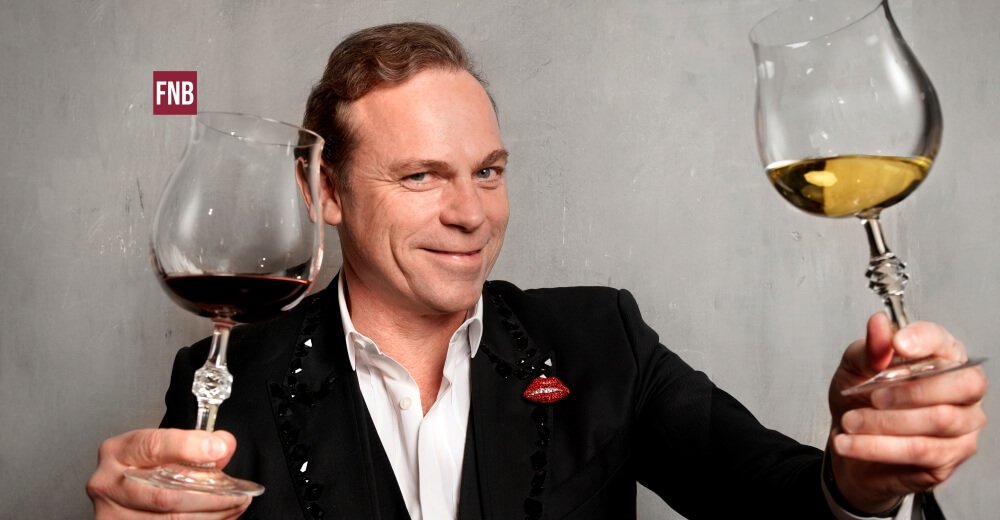
Boisset Collection is one of them. A family-owned wine house spanning Burgundy and California, it has spent decades proving that Old World craftsmanship and New World imagination don’t have to conflict. Under the leadership of Proprietor & President Jean-Charles Boisset, the collection has become a case study in how heritage and innovation can not only coexist, but strengthen each other.
Let’s explore how Boisset Collection blends heritage, innovation, and sustainability to redefine wine, luxury, and emotional connection for a new generation!
A Childhood Rooted in Terroir
Jean-Charles was born in Burgundy, France, in the village of Vougeot, a community of 184 people, both then and now. His earliest memories are framed by vineyards stretching toward the horizon and by the imposing presence of the Château du Clos de Vougeot, built by Cistercian monks in 1098.
Those monks introduced the concept of terroir to the wine world. They believed that soil, climate, farming practices, and human touch together shape the soul of a wine. Growing up in their shadow, Jean-Charles absorbed this philosophy not as theory, but as lived reality.
Behind the prestige, Burgundy has always been a land that demanded resilience. His grandparents were schoolteachers, and the region was still recovering from the economic and social devastation of World War II. When his parents founded the family wine company in 1961, they were just 18 years old. They had no capital, no vineyards of their own, and no safety net. They purchased grapes from neighbors and built the business slowly, deliberately, and with humility.
That humility, earned rather than inherited, became foundational. Wine was never treated as an industrial product or a luxury commodity detached from labor. It was understood as agriculture, culture, and responsibility. This mindset would later shape a philosophy that honors history without becoming imprisoned by it.
Old World Foundations, New World Awakening
The course of the family business changed in the late twentieth century, when Jean-Charles and his sister Natalie joined the company. They were shaped by Burgundian tradition, but never confined by it. They understood that the future of fine wine would require openness, curiosity, and the courage to evolve.
A defining moment occurred in 1981, when a young Jean-Charles traveled to California and encountered Buena Vista Winery, the oldest winery in the state. The experience was revelatory. California’s wine culture felt expansive, expressive, and unafraid of reinvention. It honored history, but did not revere it to the point of stagnation.
That discovery ignited a lifelong passion for America. It also planted the seed for a transatlantic vision that would later define Boisset Collection. European discipline paired with American creativity became the lens through which the company would grow. As Jean-Charles later articulated, “This philosophy, honoring history while embracing innovation, defines everything Boisset Collection does today, across more than 30 wineries in France and California, focused on fine wines from accessible luxury to the highest tier.”
Growth, however, was never pursued for scale alone. Expansion was guided by emotion as much as economics. Each acquisition was evaluated not only for vineyard quality or production capacity, but for its story, cultural relevance, and ability to contribute meaningfully to the larger narrative.
A Collection Built on Stories, Not Scale
What distinguishes Boisset Collection from many global wine groups is its refusal to homogenize. The family has never sought to impose a single style or identity across its holdings. Instead, each winery is selected because it carries a distinct legacy and a strong sense of place.
From Domaine Maire in Jura, founded in 1632, to California estates such as DeLoach Vineyards, the motivation remains consistent. The goal is not to overwrite history, but to bring it to life in a contemporary context.
Within the collection, individuality is not merely tolerated. It is protected. Each estate is encouraged to express its terroir fully, even when stylistic differences are pronounced. Burgundy and California may speak different dialects of wine, but they share a common emotional language. As Jean-Charles explains, “Each winery is allowed to express its terroir and individuality, but they are united by shared values, passion for place, respect for history, sustainable farming, and human connection.”
This approach allows the collection to function less like a corporate portfolio and more like a constellation of voices. The wines do not compete with one another. They converse. Together, they create a narrative that is richer precisely because it is diverse.
Responding to a New Generation of Drinkers
As global consumption patterns evolve, the wine industry is being reshaped by younger consumers who approach alcohol with fundamentally different expectations. Health consciousness, moderation, creativity, and social engagement now influence purchasing decisions as much as prestige or provenance.
Recognizing this shift early, Boisset Collection embraced innovation without abandoning its core principles. One of the most visible changes has been a move toward lighter, fresher styles of wine designed to appeal to a broader audience. Low-alcohol and non-alcoholic wines are being developed alongside sparkling offerings that emphasize vibrancy and versatility.
“These wines are not about taking something away,” Jean-Charles notes. “They are about creating new ways for people to connect with wine in their lives.”
Equally important is the reimagining of how wine is enjoyed. Wine-based cocktails, casual tasting formats, and social lounges are gaining traction. A downtown Napa tasting space emphasizes conversation and community over formality. The goal is not simplification, but invitation.
Underlying all of these initiatives is an understanding that today’s consumers expect purpose. Sustainability, transparency, and storytelling are no longer optional. They are prerequisites. Because these values have been embedded in the collection for decades, the response feels authentic rather than reactive.
Creating Emotion Through Experience
For Jean-Charles, wine has always been about feeling. It carries memory. It marks celebration. It brings people closer. That belief shapes the experiences created across the family’s estates, finding its fullest expression at Raymond Vineyards in Napa Valley, where wine is meant to be lived as much as tasted.
The visitor journey begins not in a tasting room, but in the Theater of Nature, a biodynamic and organic garden open to the public. Designed to reconnect guests with agriculture and ecology, the space emphasizes the living systems that sustain winemaking.
From there, guests move through a series of sensory encounters that engage sight, sound, touch, and aroma. Wine and music pairings, interactive tastings, and educational environments transform information into memory. As Jean-Charles often says, “Wine is not just a product. It is an emotional experience.”
By appealing to emotion rather than relying solely on technical explanation, the experience becomes personal, lasting, and deeply human.
Sustainability as a Moral Imperative
Long before sustainability became a marketing imperative, it was already a personal conviction for the Boisset family. Growing up in Burgundy, Jean-Charles witnessed firsthand the environmental damage caused by chemical farming. Rivers near his childhood home suffered visibly, and those early observations left a lasting impression.
“It was impossible to ignore what we were doing to the land,” he recalls. “Once you see that, you cannot unsee it.”
In response, Domaine de la Vougerie began biodynamic farming in the mid-1990s, placing the family among the early adopters of these practices in Burgundy. Today, all estate vineyards in France and California are farmed organically and biodynamically. Where vineyards are not owned, partnerships are formed only with growers who meet strict sustainability standards.
Care for the land does not end at the edge of the vineyard. Across the estates, solar power, thoughtful water use, and globally recognized sustainability certifications are part of daily practice. But sustainability is seen as something broader than environmental impact. It also means caring for people and communities.
Europe and America in Dialogue
Balancing European heritage with American innovation requires more than physical presence on two continents. It requires cultural fluency. Burgundy provides the philosophical foundation, discipline, terroir, and continuity. California offers space for experimentation, openness, and creative expression.
“At our best, we let these cultures speak to each other,” Jean-Charles explains. “One brings rigor. The other brings freedom.”
At DeLoach Vineyards, this balance is expressed through a Burgundian focus on Pinot Noir and Chardonnay, organic farming, open-top fermenters, and hands-on winemaking. Buena Vista Winery, by contrast, celebrates California’s pioneering history while presenting it through a modern, engaging lens.
A Legacy Beyond the Bottle
Looking ahead, the future of fine wine will be defined by lighter styles, experiential engagement, sustainability, and authenticity. Wine will continue to move beyond the bottle, becoming a platform for storytelling, community, and shared experience.
For Jean-Charles, legacy is not measured in volume or valuation. It is measured in continuity of purpose. “Wine is about connection,” he says. “Between people. Between generations. Between the land and the moment we live in.”
The aspiration is not simply to build a brand, but to cultivate something enduring. A living expression of beauty, responsibility, and human connection that continues to evolve long after any single bottle is finished.